

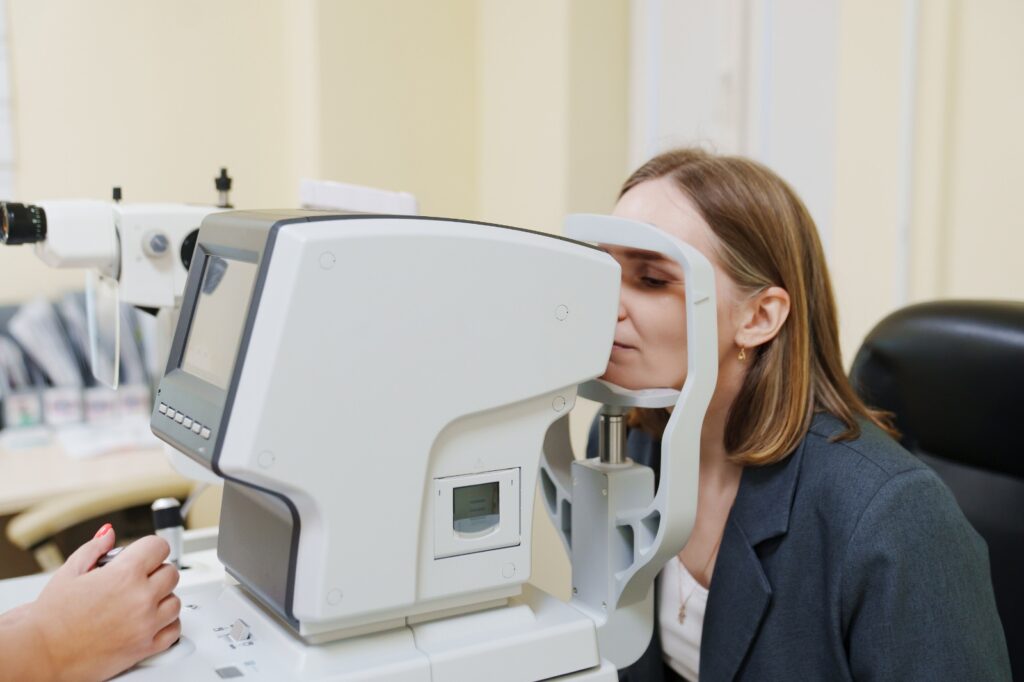
Did you know your eyes have their own “internal pressure”? It’s called IOP (intraocular pressure), and it’s key to keeping your eyes healthy and your vision sharp! It is maintained by the fluid (aqueous humour) that nourishes and hydrates it. Like a balloon, your eye needs just the right pressure to hold its shape. Too high or too low pressure can lead to problems.
Why it matters:
- High IOP = a major risk factor for glaucoma, which can quietly damage your optic nerve.
- Low IOP = can signal other eye issues or trauma.
How it’s tested:
- Doctors use a tonometer—sometimes a gentle puff of air or a tiny touch—to measure eye pressure.
- Quick, painless, and super important for protecting your vision.
Why you should care:
- Early detection of high eye pressure = better prevention of vision loss.
- If you have glaucoma, regular IOP checks help keep your treatment on track. Monitoring IOP ensures that medications or procedures are keeping pressure in a safe range.
Bottom line: IOP testing isn’t just a routine check—it’s a window into your eye’s health, helping prevent serious vision problems before they happen.